2025 IOC IAKS ARCHITECTURE PRIZE
2025 IOC IAKS ARCHITECTURE PRIZE
Winners of the 2025 IOC IAKS Architecture Prize for sustainable, accessible and innovative sports and leisure facilities
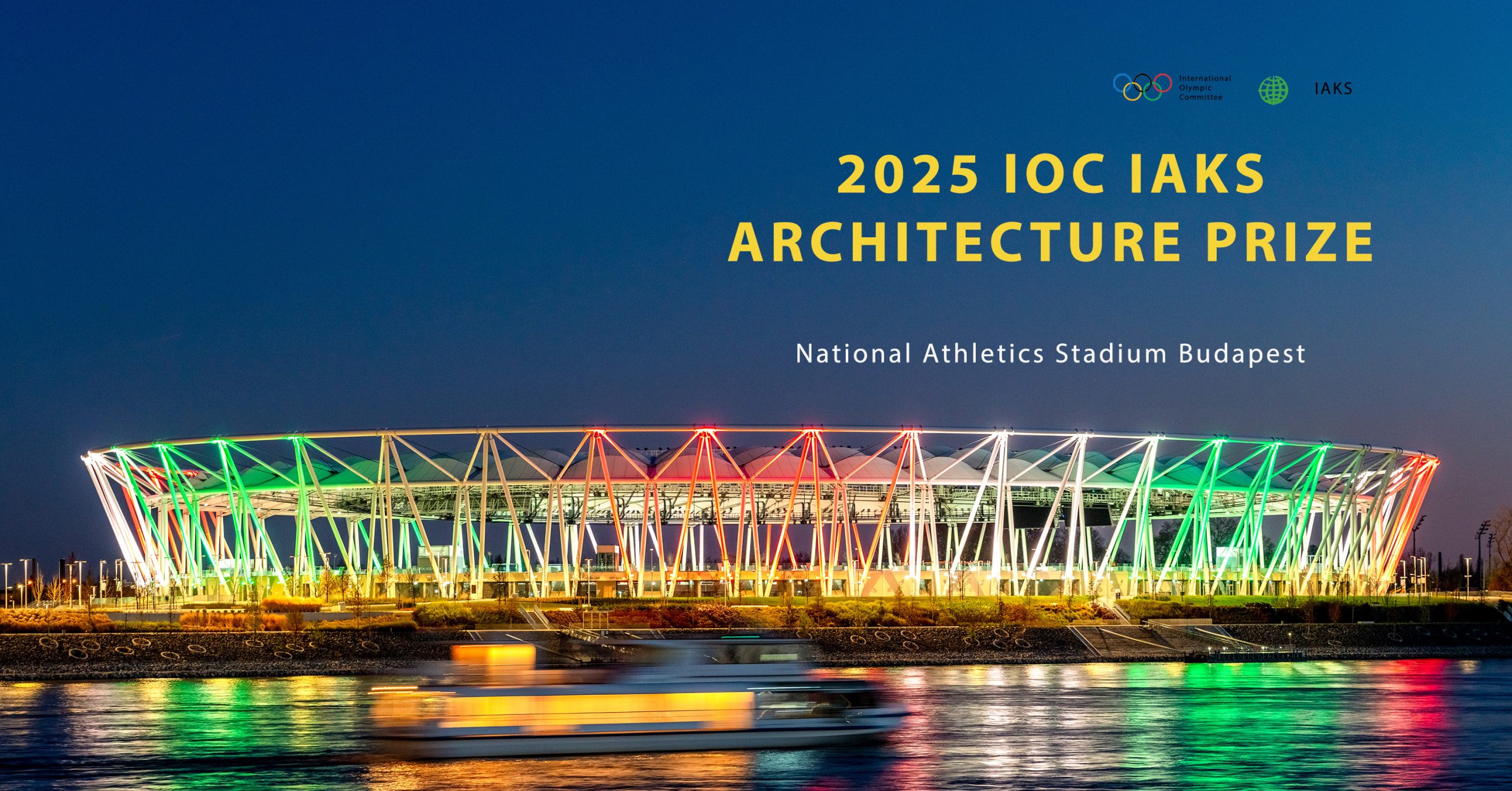
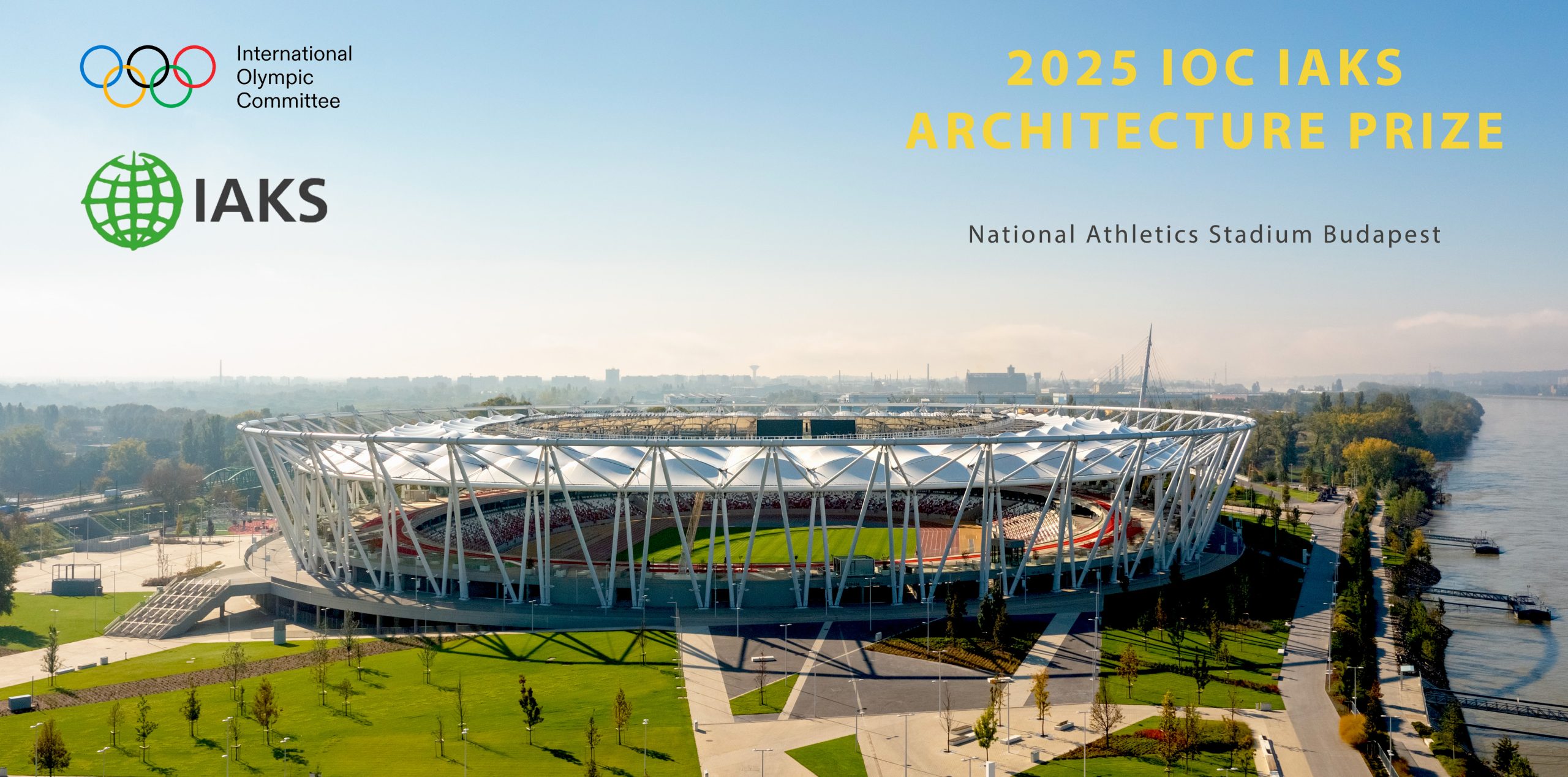
National Athletics Stadium in Budapest
IOC and IAKS present this year’s Architecture Prize for sustainable, accessible and innovative sports and leisure facilities
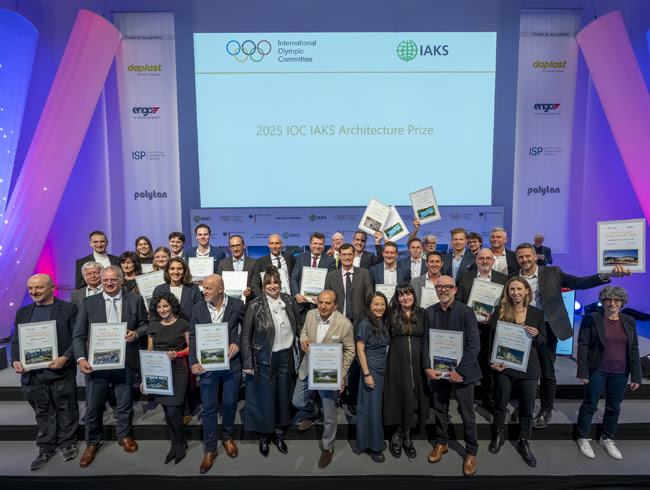
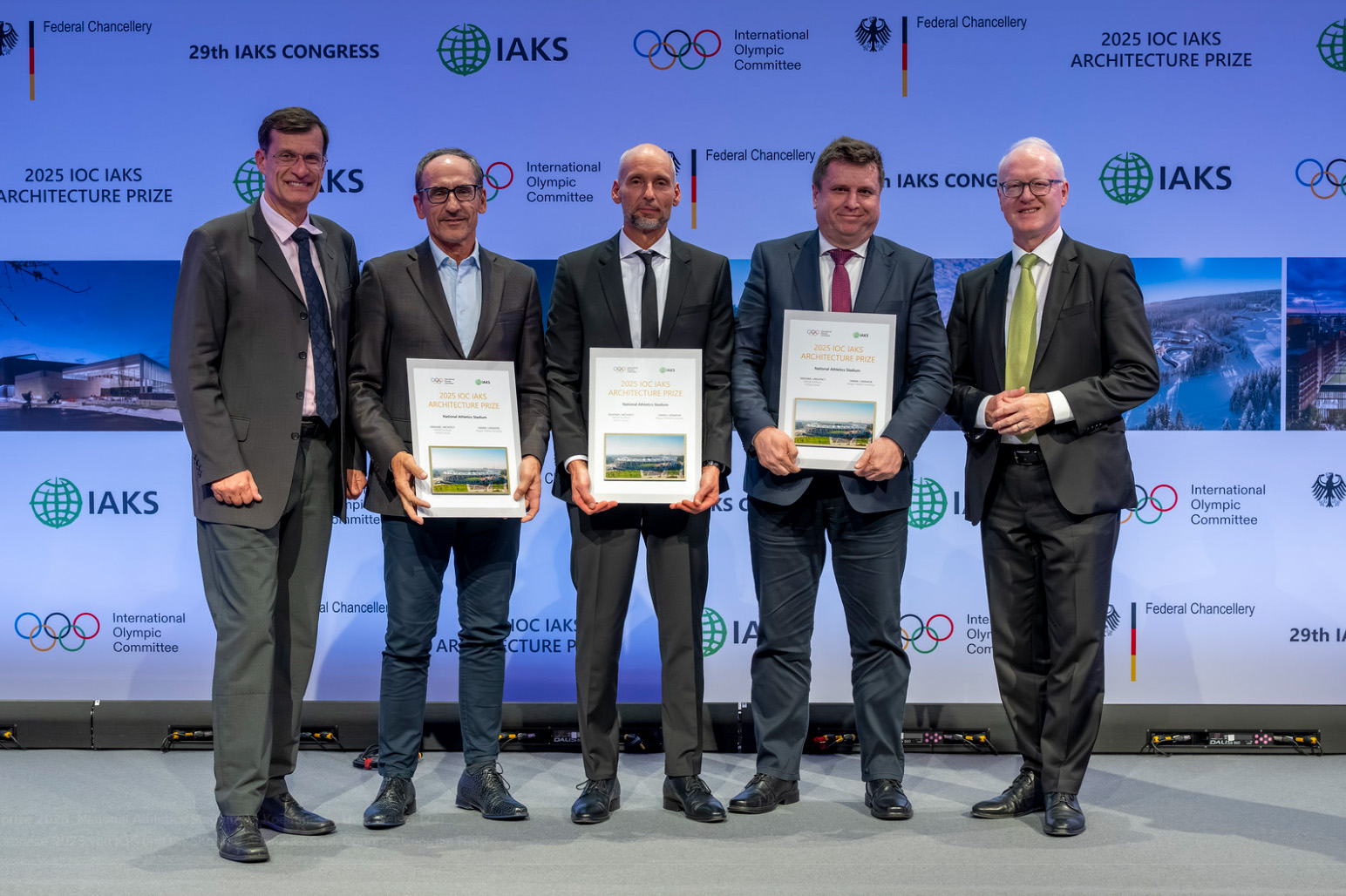
At a festive gala on 28th October 2025, the International Olympic Committee (IOC) and the International Association for Sports and Leisure Facilities (IAKS) are presenting the prestigious awards for exemplary sports and leisure architecture.
At the ceremony, distinguished personalities from architecture, management and sport came together to honour facilities that set new standards in sports and leisure facilities. A total of nine projects received the IOC IAKS Architecture Prize. Two student projects representing the future of sports architecture were recognized for their originality and inventiveness.
The jury was spoilt for choice, with 69 competition entries from 25 different countries, including New Zealand, Canada and Austria. Projects with exceptional design and functionality were also submitted from El Salvador, Finland and Indonesia.
National Athletics Stadium – Budapest, Hungary
Stadiums hosting the World Athletics Championships must adhere to specific requirements in order to comply with the competition format. This often makes it difficult to find a sustainable post-event venue configuration. In this case, however, the architects and contractors developed a new concept offering an innovative and exemplary solution. Designing the upper concourse as part of the urban realm and incorporating it into the public park at the stadium site creates new opportunities for recreational activities within the stadium. There is space for both sports and non-sports activities, all of which are sheltered by the remaining roof structure. Located next to the River Danube, the striking visual impact of the steel columns and rings forming the roof structure not only provides a dynamic setting for everyday recreational use, but also establishes the stadium as a new landmark in the cityscape.